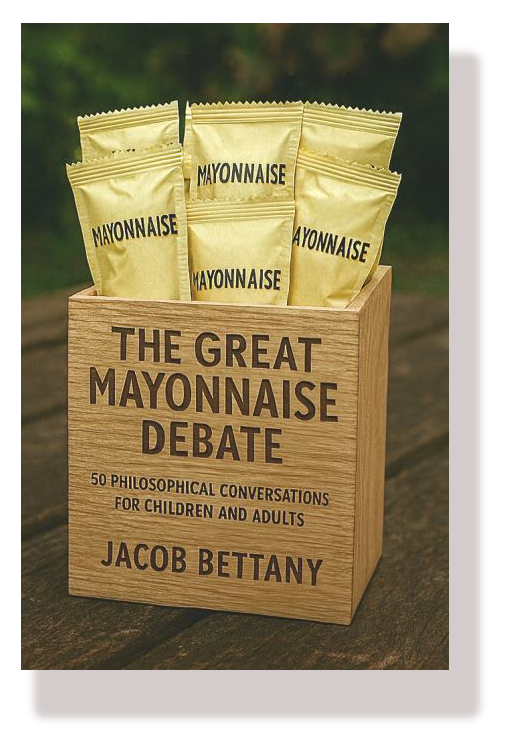
The Great Mayonnaise Debate
50 Philosophical Conversations for Children and Adults
Available at Amazon.
About the book
How many packets of mayonnaise can you take from a pub before it’s too many?
It sounds like a joke – but it’s also philosophy.
The Great Mayonnaise Debate turns everyday puzzles and curious questions into conversations worth having. Some chapters tackle right and wrong – like whether to keep money you find in the street or when it’s okay to bend a rule. Others explore how we know what’s true, what we can trust, and whether two people can see the same thing differently. Together, they show how philosophy runs through the choices we make and the way we understand the world.
Each chapter follows a clear, engaging structure: it sets up a scenario or question, offers space for reflection, introduces a handful of philosophical approaches, and ends with prompts to keep the discussion alive. The format makes it easy to bring philosophy into everyday life – around the dinner table, on car journeys, at bedtime, or on the walk to school.
This is not a book of answers, but a book of questions – the kind that make dinner tables livelier, car journeys more interesting, and quiet evenings a little more thoughtful. Whether you’re eight or eighty, you’ll discover that philosophy isn’t about being clever or complicated. It’s about noticing, wondering, and learning to listen to each other as we figure things out.
Funny, thoughtful, and engaging, The Great Mayonnaise Debate gets everyone talking.
Frequently Asked Questions
What is The Great Mayonnaise Debate about?
It’s a book of 50 short chapters, each beginning with an everyday dilemma and opening into bigger philosophical questions about right and wrong, knowledge, reality, and how we live together.
Who is this book for?
It’s designed for both children and adults, encouraging conversations across generations—at the dinner table, in classrooms, or wherever curiosity strikes.
How is the book structured?
Each chapter follows a clear pattern: a scene to set the question, scenarios to explore, open philosophical questions, approaches from different traditions, and prompts for discussion.
Why is it called The Great Mayonnaise Debate?
The title grew from a playful dinner-table argument about how many mayonnaise packets it’s fair to take from a pub, which captured the spirit of turning everyday puzzles into philosophy.
Can teachers use this in the classroom?
Yes. The mix of vivid scenarios and open-ended questions makes it ideal for sparking class discussions, running activities, and helping children learn to think critically together.
What makes this book different from other philosophy-for-children books?
It balances child-friendly storytelling with real philosophical depth, offering a bridge between simple dilemmas and some of philosophy’s biggest ideas.